2014년 10월 26일 일요일

First draft

 First draft : To make citizen quit smoking,  it is better to design tobacco package with warning labels of smoking than increasing its price.

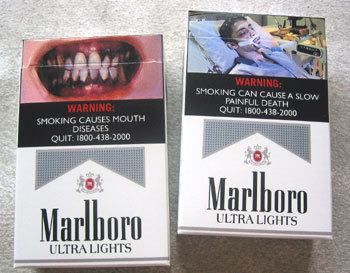
  Nowadays, to quit smoking is emphasized in the global society, and many government are trying to decrease smoking rate in many ways.  In response to that stream, Korean government determined to enact the law about increasing tobacco price. However don't you think it is restricted to the people who go though economic hardship? Do you think it can eliminate main motives of smoking? No, it isn't. Then, imagine - you are one of the smokers, you buy a pack of cigarettes, and see a gruesome or provocative image on its package. Still, do you want to smoke serenely? Most of people may not choose that. To make citizen quit smoking,  it is better to design tobacco package with warning labels of smoking than increasing its price.

  'Smoking is not good for health'. Almost every people around the world know this fact. In reality,  there are 4700 kinds of pernicious ingredients like carbon monoxide, nicotine, cyanide and ammonia and they work as causing cancer or promoting factor. Also, they result in not only cancer but COLD and a respiratory disease. For this reasons, it is advised to stop smoking world widely then most of countries have implemented various endeavors to make their nation quit smoking. Increasing tobacco price, warning labels on its package and anti-smoking education at schools or companies are those examples. In Korea, the government have carried out education to lower smoking rate. However, according to OECD, the smoking rate of Korea points 21.6%, which ranks 14 among 34 countries. It is almost similar with the average smoking rate (20.7%)of OECD countries. This means that Korea still needs some more policies to drop the smoking rate. 
  In this stream, recently,Korean government enacted law about increasing tobacco price.The government decided to increase tobacco price as much as 2000 won averagely. However, it is controversial in Korean society, because the government didn't use tobacco tax for anti-smoking projects. The original national health promotion fund is 2-billion-won, but it is only 1.2% of that price that are used in real anti-smoking projects. Also, some people criticize this policy, because it is restricted to the common people, not for every people. That is, smokers who are rich do not mind increased price of cigarette. This is regarded as limits of this policy. Furthermore, just increasing price of tobacco cannot eliminate the fundamental motive of smoking. 
  At this point, To make citizen quit smoking,  it is better to design tobacco package with warning labels of smoking than increasing its price. The warning labels in this argument mean not just prose, but images that give smokers feel provocative and alarming. Countries like Australia, Brazil and Belgium are using this policy and exactly more than 60 countries in the Americas, Eastern Mediterranean, Europe, South-East Asia and Western Pacific regions require pictures or images on cigarette packs. Smokers in countries where a warning said that a particular warning on package were much more likely to know about that hazard and smokers who reported noticing warnings were 1.5 to 3.0 times more likely to believe in each health hazard. In Korean society, designing cigarette package with warning labels of smoking will be more effective policy than increasing its price.

  The effect of designing tobacco package with warning labels can be explained by psychological theory. To quit smoking is regarded as hard work, because of its chemicals, nicotine. Nicotine is one of the most heavily used addictive drugs in the world. It makes smokers not be able to quit smoking and also accompany with withdrawal symptoms include anxiety, irritability,  difficulty concentrating and insomnia. Because of that addiction, smoking is leading cause of death in Australia, recording killing 15,000 people in a year. That means it really require people to have mental attitude about quitting smoking. Then, what psychological influences that smokers receive from the warning labels on package? 
  Above all, it is learning psychology It means that as we learn, we alter the way we perceive our environment, the way we interpret the incoming stimuli, and therefore the way we interact, or behave. When a smoker buy cigarette, he or she contact with the package images that shows harmful influences of smoking. As more he contact with it, he may think of bad effects of smoking, then consider to smoke or not.Given the reach and frequency of exposure, warning labels have the potential to have a significant impact on smoking behavior. 
  Also, is is also considered that the vision put a importance role on our mental. We think and feel a lot when we see something. When we watch scary movie, mental state of fear is created in our mind and when we watch sad scene, we may feel sadness in our mind. Sometimes, we take a rest through visiting art museum or traveling. All of things are related to vision. It is also applied to warning images on tobacco.  The images work as compelling stimuli (because of its formidability), so he or she may receive considerable confusion. Most of all smokers know that smoking is harmful, but rarely see its terrible outcomes directly. Therefore, the smoker want to avoid that horrible situation then effect of labeling will be more considerable.

  Obviously, my opinion cannot be applied to all people. There are people who do not mind provocative images or do not believe warning images. However, although some smoker do not mind that, it is meaningful, because they can definitely see that smoking is harmful through threatening images.   
  Also, in NY, there are people who are selling only one cigar and it can be occur in Korea, too. Then, buyer do not have to watch warning image on the tobacco package. However, it is illegal clearly. In addition, The seller are likely to go where multiple people convene., so, catching him or her will be not that big problem. 

  Korea government tried to lower the smoking rate, but it is needed to solve fundamental motives. At this point, warning labels on tobacco package can not only give smokers a chance to think about severity of smoking, but check the real harmful images of smoking. Furthermore, the realistic and provocative images from the package are able to make smokers get insecure state of mind then in the case of non-smokers, they can reconsider the harmful effect of smoking through that images.

Thus warning labels on tobacco package is helpful to quit smoking. If we try to solve the intrinsic problem like this, there will be remarkable result of decreased smoking rate.  

Conclusion


Korea government tried to lower the smoking rate, but it is needed to solve fundamental motives. At this point, warning labels on tobacco package can not only give smokers a chance to think about severity of smoking, but check the real harmful images of smoking. Furthermore, the realistic and provocative images from the package are able to make smokers get insecure state of mind then in the case of non-smokers, they can reconsider the harmful effect of smoking through that images.
Thus warning labels on tobacco package is helpful to quit smoking. If we try to solve the intrinsic problem like this, there will be remarkable result of decreased smoking rate.    

Refutation


1. What is my thesis?
To make citizen quit smoking,  it is better to design tobacco package with warning labels of smoking than increasing its price.

2. What is the opposite position?
Warning labels on tobacco package sometimes cannot work.

3. What arguments can I anticipate?
a) Sometimes, people skip the tobacco package(not looking). 
b) In NY, there are people who sell only one cigar.(he will not receive the effect of warning labels)
c) what if the smoker is accustomed to that image?

4. How will I counter those arguments?
a) But, the smoker is obliged to face that horrible image that warns him or her.
b) It is illegal behavior and NY does not implement that regulation yet.
c) The cover may often changes. Also, I don't think that smokers can be accustomed to the image, because it is  provocative enough.  


My Refutation and Concession

 Obviously, my opinion cannot be applied to all people. There are people who do not mind provocative images or do not believe warning images. However, although some smoker do not mind that, it is meaningful, because they can definitely see that smoking is harmful through threatening images.   
 Also, in NY, there are people who are selling only one cigar and it can be occur in Korea, too. Then, buyer do not have to watch warning image on the tobacco package. However, it is illegal clearly. In addition, The seller are likely to go where multiple people convene., so, catching him or her will be not that big problem. 


Confirmation


1. What is my thesis?
To make citizen quit smoking,  it is better to design tobacco package with warning labels of smoking than increasing its price.

2. What types of source am I using to defend my thesis? 
I am using surveys and real examples of the other countries.


3. Are my arguments mostly based on evidence, logic or emotion?
My arguments are based on evidence and emotion, but little bit lack of logic yet. 


My Confirmation

 The effect of designing tobacco package with warning labels can be explained by psychological theory. To quit smoking is regarded as hard work, because of its chemicals, nicotine. Nicotine is one of the most heavily used addictive drugs in the world. It makes smokers not be able to quit smoking and also accompany with withdrawal symptoms include anxiety, irritability,  difficulty concentrating and insomnia. Because of that addiction, smoking is leading cause of death in Australia, recording killing 15,000 people in a year. That means it really require people to have mental attitude about quitting smoking. Then, what psychological influences that smokers receive from the warning labels on package? 

 Above all, it is learning psychology It means that as we learn, we alter the way we perceive our environment, the way we interpret the incoming stimuli, and therefore the way we interact, or behave. When a smoker buy cigarette, he or she contact with the package images that shows harmful influences of smoking. As more he contact with it, he may think of bad effects of smoking, then consider to smoke or not.Given the reach and frequency of exposure, warning labels have the potential to have a significant impact on smoking behavior. 

 Also, is is also considered that the vision put a importance role on our mental. We think and feel a lot when we see something. When we watch scary movie, mental state of fear is created in our mind and when we watch sad scene, we may feel sadness in our mind. Sometimes, we take a rest through visiting art museum or traveling. All of things are related to vision. It is also applied to warning images on tobacco.  The images work as compelling stimuli (because of its formidability), so he or she may receive considerable confusion. Most of all smokers know that smoking is harmful, but rarely see its terrible outcomes directly. Therefore, the smoker want to avoid that horrible situation then effect of labeling will be more considerable.


Narattion

Narration Example

Instructions:
1. Write your thesis.
2. Answer questions 1, 2 and 3.
3. Write your Narration.

My persuasive argument thesis is: To make citizen quit smoking,  it is better to design tobacco package with warning labels of smoking than increasing its price.

1. What do people already know about my topic?

Most of Koreans know that Korean government enacted law about increasing tobacco price. Some Koreans know that there are some countries which implement policy of warning labels on cigarette package. Everyone knows smoking is harmful. Every smokers knows the bad influences of cigar, but they cannot quit. Korean smokers can easily see the polished tobacco packages.  

2. What research has already been done about my topic?
To make people quit smoke by considering classical conditioning. 

http://cdrwww.who.int/fctc/guidelines/ArtElevenHammondOne.pdf
warning labels on tobacco package (not with provocative images just prose)

http://www.tobaccofreekids.org/research/factsheets/pdf/0325.pdf
countries which implement this policy


3. What are the implications of my argument (What if I'm right? What if I'm right and people ignore me?)

 To make citizen quit smoking,  it is better to design tobacco package with warning labels of smoking than increasing its price. If people ignore me, they cannot know the real example of harmful effect of smoking, just know that fact: smoking is bad. Directly watching bad image can make people consider smoking again.   


My Narration
  
  'Smoking is not good for health'. Almost every people around the world know this fact. In reality,  there are 4700 kinds of pernicious ingredients like carbon monoxide, nicotine, cyanide and ammonia and they work as causing cancer or promoting factor. Also, they result in not only cancer but COLD and a respiratory disease. For this reasons, it is advised to stop smoking world widely then most of countries have implemented various endeavors to make their nation quit smoking. Increasing tobacco price, warning labels on its package and anti-smoking education at schools or companies are those examples. In Korea, the government have carried out education to lower smoking rate. However, according to OECD, the smoking rate of Korea points 21.6%, which ranks 14 among 34 countries. It is almost similar with the average smoking rate (20.7%)of OECD countries. This means that Korea still needs some more policies to drop the smoking rate. 
  In this stream, recently,Korean government enacted law about increasing tobacco price.The government decided to increase tobacco price as much as 2000 won averagely. However, it is controversial in Korean society, because the government didn't use tobacco tax for anti-smoking projects. The original national health promotion fund is 2-billion-won, but it is only 1.2% of that price that are used in real anti-smoking projects. Also, some people criticize this policy, because it is restricted to the common people, not for every people. That is, smokers who are rich do not mind increased price of cigarette. This is regarded as limits of this policy. Furthermore, just increasing price of tobacco cannot eliminate the fundamental motive of smoking. 
  At this point, To make citizen quit smoking,  it is better to design tobacco package with warning labels of smoking than increasing its price. The warning labels in this argument mean not just prose, but images that give smokers feel provocative and alarming. Countries like Australia, Brazil and Belgium are using this policy and exactly more than 60 countries in the Americas, Eastern Mediterranean, Europe, South-East Asia and Western Pacific regions require pictures or images on cigarette packs. Smokers in countries where a warning said that a particular warning on package were much more likely to know about that hazard and smokers who reported noticing warnings were 1.5 to 3.0 times more likely to believe in each health hazard. In Korean society, designing cigarette package with warning labels of smoking will be more effective policy than increasing its price.


2014년 10월 25일 토요일

First draft introduction

First draft introduction 


 Nowadays, to quit smoking is emphasized in the global society, and many government are trying to decrease smoking rate in many ways.  In response to that stream, Korean government determined to enact the law about increasing tobacco price. However don't you think it is restricted to the people who go though economic hardship? Do you think it can eliminate main motives of smoking? No, it isn't. Then, imagine - you are one of the smokers, you buy a pack of cigarettes, and see a gruesome or provocative image on its package. Still, do you want to smoke serenely? Most of people may not choose that. To make citizen quit smoking,  it is better to design tobacco package with warning labels of smoking than increasing its price.

1. Attention grabber -
I attracted the audience by mentioning stream of world and the new regulation of Korea. 

2. Explains the topic -
I made the readers to think about increasing tobacco price and warning labels on its package.

3. My thesis -
At last, I suggested my thesis 'To make citizen quit smoking,  it is better to design tobacco package with warning labels of smoking than increasing its price.
'

Research 3


(Informationa about classical conditioning, Learning, Breaking the habit)


1.

<Breaking bad habits: classical conditioning and smoking >


http://theconversation.com/breaking-bad-habits-classical-conditioning-and-smoking-11578 


2. 

<Strategies To Stop Smoking -Why Is It So Difficult To Quit?> 

http://www.deardoctor.com/articles/strategies-to-stop-smoking/page2.php

research 2

( bad influences of just increasing tobacco price )
In New York, a Black Market For Illegal Cigarettes Thrives

A Big Tax Increase Is Fueling a Rise in Sales Of Cigarettes Imported From Low-Tax States>

Ave, who won't give his last name, is waiting for them. Bundled against the cold in a red Sean John parka and a blue ski cap, he clutches a black plastic bag stuffed with one of New York's hottest illicit products.
"Newports, Newports. Cigarettes, cigarettes," he chants under his breath to passersby. Customers slip him $5 bills, and he gives each a green-and-white pack of smokes.
Ave's business is untaxed cigarettes smuggled in from other states, and he boasts he can sell 50 packs a night. "I go for shopping areas, wherever there's a large crowd," the 28-year-old says. "I make a good profit, enough to pay my bills."
........(skip)
Why the boom? Last summer, the city boosted its excise tax on cigarettes to an eye-popping $1.50 a pack, from eight cents. New York state also raised its levy, to $1.50 from $1.11. The combined $3-a-pack wallop makes cigarettes here the costliest in the U.S., at about $7.50 a pack. On the street, $4 to $5 a pack is practically irresistible.
Updated Dec. 27, 2002 12:01 a.m. ET
http://online.wsj.com/articles/SB1040938577857473793

Classical argument outline


1. The introduction, which warms up the audience, establishes goodwill and rapport with the readers, and announces the general theme or thesis of the argument.
I will start with the current Korean law revision, which is related to increasing tobacco price. Then, I'll have question about its effectiveness. Also, I'll mention the example of the other countries like Australia and France, where the warning label on the tobacco package is implemented and show its effectiveness. Finally, I will end with my thesis, "To make citizen quit smoking, it is better to design tobacco package with warning labels of smoking than increasing its price." 
2. The narration, which summarizes relevant background material, provides any information the audience needs to know about the environment and circumstances that produce the argument, and set up the stakes-what’s at risk in this question. In academic writing, this often takes the form of a literature review.
I will summarize the survey and research I've found and provide an explanation for psychological effects related to my argument which will help audience to understand. Also, the examples of the other countries will be used to persuade them. 
3. The confirmation,which lays out in a logical order (usually strongest to weakest or most obvious to most subtle) the claims that support the thesis, providing evidence for each claim.

       I will start by introducing the many kinds of anti-smoking policy, especially warning labels on tobacco package and increasing its price. Then, I'll examine the limits of increasing cigarette price by using real examples or surveys. Furthermore, I'll prove reasons why warning label is more effective through suggesting psychological theories.    


4. The refutation and concession, which looks at opposing viewpoints to the writer’s claims, anticipating objections from the audience, and allowing as much of the opposing viewpoints as possible without weakening the thesis.
I will concede that increasing tobacco price also contributes to decreasing smoking rate in some aspects, but suggest its limits, which is only restricted to the people who have economic difficulties. I'll take an example of Australia, where is implementing one of the largest health warnings on cigarette package. Also, I'll add the opinion of Korean smokers who don't like to quit smoking even if the price of cigar is increased.  
5. The summation, which provides a strong conclusion, amplifying the force of the argument,  and showing the readers that this solution is the best at meeting the circumstances.
  
       I will close with a summary of my reasons then put a importance of its effects.
Finally, I'll end with mentioning my thesis.


2014년 10월 24일 금요일

Articulation


1) My argument is ' To make citizen quit smoking,  it is better to design tobacco package with warning labels of smoking than increasing its price'.
I want to argue that just increasing tobacco price will not be helpful to make citizen quit smoking, then warning labels on the tobacco package is more effective. I suppose that it is related to psychological reasons, so my essay will suggest psychological reasons why labels with harmful effects of smoking is more effective than increasing price. 
(In my argument, warning label on tobacco is kind of representing remarkable pictures)

2) How I found my argument
Recently, I heard news that Korean government decided to increase the price of cigarette. It may give some influences to smokers, but I think it can't solve original problem of smoking. Also, that regulation is  restricted to the poor or normal citizen, not with the rich. I think, on the other hand, the warning labels on tobacco package will make people think seriousness of smoking again, then quit to smoke.   

3) New research questions
I have several questions that need to be resolved.
a) Find survey or research to prove the effect of warning labeling on tobacco package.
b) What is  psychological effects related to optimal stimulus ?   
c) What is psychological effects of reminding? 
d) what will be  limits of increasing cigarette price? (based on exact reasons)

4) Connections to the Harvard Sampler 
This argument is related with Harvard Sampler, especially about chapter' Human Mind'. The reasons are because my argument is also based on psychological reasons and mental thinking of human. 


Research

Tobacco Warning Labels Encourage Smokers to Quit and Discourage Nonsmokers from Starting to Smoke
 The evidence that warning labels can and do work is solid and extensive. The International Tobacco Control Policy Evaluation Project (“ITC”) is an international cohort study that consists of surveys of adult smokers in nineteen countries and focuses on tobacco control policy evaluation. According to ITC research on tobacco warning labels, adult and youth smokers report that large, comprehensive warning 
labels reduce smoking consumption, increase motivation to quit and increase the likelihood that they will remain abstinent following a quit attempt.

 Another ITC research project includes a four-country comparative study by Hammond, et al. which found that text-only labels (as seen in the U.S.) were associated with lower levels of awareness about the health risks of smoking than prominent, pictorial warning labels (as seen in Canada and Australia). 
 Furthermore, the study indicated that pictorial warning labels were more effective than text-only labels in leading people to think about quitting and deterring them from having a cigarette. Other important findings from the study include: 
• “Large, graphic warnings on cigarette packages are an effective means of increasing health knowledge among smokers [and] may also help to reduce the disparities in health knowledge by providing low-income smokers with regular access to health information.”  
Smokers in countries where a warning depicts a particular health hazard of smoking were much more likely to know about that hazard and smokers who reported noticing warnings were 1.5 to 3.0 times more likely to believe in each health hazard. This is important because smokers who perceive greater health risk from smoking are more likely to intend to quit and quit smoking successfully.

 This study provides strong evidence that perhaps the most effective way to convey health risks to smokers is with graphic, large and comprehensive warning labels. Other studies suggest that picture warnings that include graphic, fear-arousing depictions of smoking’s effect on the body are the most effective because they are associated with increases in motivation to quit smoking, thinking about health risks and engaging in cessation behavior. A follow-up investigation of the four-country study revealed 
that larger, pictorial warning labels were associated with increased quit attempts.  

Another study, 
released in 2010, found that more graphic depictions of health consequences on warning labels produced stronger effects and strengthened smokers’ intentions to quit smoking. A recent Canadian study found that, after controlling for price, graphic tobacco warnings significantly decreased the odds of being a smoker and significantly increased the odds of making a quit attempt.

From:

title- <TOBACCO WARNING LABELS: EVIDENCE OF EFFECTIVENESS>


No adverse consequences

The tobacco industry has suggested that the use of large pictures may reduce the effectiveness of health warnings and could actually lead to increases in smoking behaviour. This is captured in a quotation from the former chief executive officer of British American Tobacco: “The growing use of graphic image health warnings … can offend and harass consumers – yet in fact give them no more information than print warnings.”1 However, there is no evidence that pictorial warnings lead to boomerang effects. An analysis of data from the ITC Four Country Survey found that the Australian pictorial warnings, introduced in 2005, led to greater avoidant behaviours (e.g. covering up the pack, keeping it out of sight, or avoiding particular labels), compared to Canada, the United Kingdom, and the USA. Importantly, those smokers who engaged in avoidant behaviours were no less likely to intend to quit or to attempt to quit,8 replicating the findings of a study of the Canadian warnings.5Thus, although pictorial warnings can lead to avoidance and defensive reactions, such reactions are actually indicators of positive impact.
From :

title- <The impact of pictures on the effectiveness of tobacco warnings>

Geoffrey T Fong a, David Hammond a & Sara C Hitchman aa. University of Waterloo, 200 University Avenue West, Waterloo, ON, N2L 3G1, Canada.Correspondence to Geoffrey T Fong (e-mail: gfong@uwaterloo.ca). Bulletin of the World Health Organization 2009;87:640-643. doi: 10.2471/BLT.09.069575


Higher cigarette prices reduce cigarette smoking by decreasing smoking prevalence and reducing the number of cigarettes smoked by continuing smokers.

Well over 100 studies from high-income countries have confirmed the inverse relationship between cigarette prices and cigarette smoking. The consensus among researchers working in this area is that a 10% increase in the price of cigarettes in developed countries will result in a 3 to 5% reduction in overall cigarette consumption. Studies that investigate the impact of cigarette prices on smoking prevalence and average smoking intensity among smokers separately generally find that approximately half of the impact of price on overall cigarette demand results from reducing the number of smokers by motivating current smokers to quit and discouraging youths from ever starting to smoke.

Smokers living in areas with higher cigarette prices are significantly more motivated to quit. However, the use of coupons, buying low-tax cigarettes on Native American reservations, or buying cigarettes on the internet,common strategies used by smokers to reduce their out-of-pocket expenses, weaken the impact of price on smoking behavior. For example, smokers who bought cigarettes from Native American reservations were half as likely to make a quit attempt compared with those who bought full-priced cigarettes.

To have a positive impact on public health, cigarette prices need to increase faster than incomes to ensure that cigarettes become less affordable over time

from :


But some are concerned about whether the tax hike could effectively discourage tobacco use and prevent young people from becoming addicted to cigarettes. 

“Price increases can be an effective tool in the short term, but they alone can’t help people quit smoking,” said an official from the Korea Health Promotion Foundation. 

In addition to a price increase, the government should introduce strict antismoking policies, such as requiring tobacco producers to put graphic and visual warnings on cigarette packages, as well as putting more anti-smoking advertisements on TV, she added

From :

By Oh Kyu-wook (596story@heraldcorp.com


2014년 10월 23일 목요일

Research Proposal

Research Proposal

What is my current topic?
My topic is 'To make citizen quit smoking,  it is better to design tobacco package with warning labels of smoking than increasing its price'. I want to research not only psychological influence through visual images, but consumer sentiment. Then, my final persuasive essay will present some reasons why It is better to design tobacco package with harmful influence of smoking than increasing its price.
 
What are my guiding questions?
What is real evidence or examples of this idea? Especially, what are psychological reasons? 

What are my current thoughts?
*What do you already know about your topic? What are your opinions? What do you want to persuade people of?*
Recently, Korean government made a rule which is about increasing tobacco price. But I think it is not that effective. Through representing bad effects of cigarettes on its package, people will go through psychological confusion ,then may quit smoking.

What is the opposition?

The opponents will say like this :
Increasing price is more effective, because smokers will feel economical burden.


2014년 10월 22일 수요일

Changed Topic

To make citizen quit smoking,  it is better to design tobacco package with warning labels of smoking than increasing its price.