2014년 12월 5일 금요일

Final draft

Final draft: To make smokers quit smoking,  it is better to design tobacco package with warning labels of smoking than increasing its price.


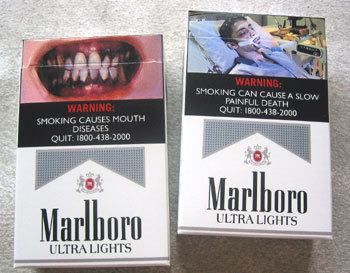
   Nowadays, to quit smoking is emphasized in the global society, and many governments are trying to decrease smoking rate in many ways. In response to that stream, Korean government determined to enact the law about increasing tobacco price. However, it is restricted to the people who go through economic hardship. Also, it will be not possible to eliminate main motives of smoking. On the other hand, there is an effective way that doesn't contain those problems. It is a warning label on smoking package. This policy is not related to the economical gap and aims to eliminate the smokers' desire to smoke. So, to make the smokers quit smokingit is better to design tobacco package with warning labels of smoking than increasing its price.

  'Smoking is not good for health.' Almost every person around the world know this fact. In reality, there are more than 4000 kinds of pernicious ingredients like carbon monoxide, nicotine, cyanide and ammonia, and they work as causing or promoting cancer(R.J. Reynolds Tobacco Company, 2012). Also, they result in not only cancer but respiratory diseases(BeTobaccoFree.gov, 2014). For these reasons, it has been advised to stop smoking world widely, then most of the countries have implemented various endeavors to make their nation quit smoking. Increasing tobacco price, warning labels on its package and anti-smoking education at schools or companies are those examples. In Korea, the government have carried out education to lower smoking rate. However, according to statistics of health from OECD, the smoking rate of Korea points 21.6%, which ranks 14 among 34 countries. It is almost similar with an  average smoking rate (20.7%)of OECD countries. This situation means that Korea still needs some more policies to drop the smoking rate. 
  In this stream, recently, Korean government enacted  a law about increasing tobacco price.The government decided to increase tobacco price as much as 2500 won averagely. However, it is controversial in Korean society, because the government didn't use tobacco tax for anti-smoking projects (Song S.H, 2014). The original national health promotion fund is 2-billion-won, but only 1.2% of that price used in real anti-smoking projects (MBC news material). Also, some people criticize this policy, because it is restricted to the common people, not for every person. That is, smokers who are rich do not mind increased price of cigarette. These situations are regarded as limits of this policy. Furthermore, just increasing the price of tobacco cannot eliminate the fundamental motive of smoking. Consider people who live in France go to Belgium to buy a cheaper cigarette.
  At this point, to make the smokers quit smoking, it is better to design tobacco package with warning labels of smoking than increasing its price. The warning labels in this argument mean not just prose, but images that make smokers feel provocative and alarmed. According to Meg Riordan, Countries like Australia, Brazil and Belgium are using this policy and exactly more than 60 countries in the Eastern Mediterranean, Western Pacific regions, America, South-East Asia and Europe require images or pictures on cigarette packages. Here is an experiment by David Hammond which proves the effects of warning labels. In his experiment, he found that the rate of UK smokers who had considered to quit smoking after noticed warnings on package went up from 27.2% to 41.7%. This result means that smokers from countries where there are images that represent bad influences of smoking on the cigarette package were far more likely to know about the hazard of smoking. In Korean society, designing cigarette package with warning labels of smoking will be more effective policy than increasing its price.

  The effect of designing tobacco package with warning labels can be explained by psychological theory. To quit smoking is regarded as hard work, because of its chemicals, nicotine. Nicotine is one of the most excessively used addictive drugs in the world. It makes smokers be not able to quit smoking and also makes them accompany with withdrawal symptoms including anxiety, irritability,  difficulty concentrating and insomnia(Amy Reichelt, 2013). Because of that addiction, smoking is leading a cause of death in Australia, recording killing 15,000 people in a year. That means it really requires people to have mental attitude about quitting smoking. Then, what psychological influences that smokers receive from the warning labels on the package? 
  Above all, it is Learning psychology. According to the Allpsych Online, It means that when we learn about something, we change not only the way we perceive our environment, but also the way we interpret the incoming stimuli. Therefore we alter the way we interact, or behave. When a smoker buys cigarette, he or she contact with the package images that show harmful influences of smoking. As more he contacts with it, he may think of bad effects of smoking, and then consider to smoke or not. Given the frequency or reach of exposure, warning labels have a probability to have a significant impact on smoking behavior. 
  Also, it is also considered that the vision put an importance role on our mental. People think and feel a lot when we see something. When a person watch scary movie, mental state of fear is created in his or her mind. When a person watch sad scene, he or she may feel sadness in their mind. Sometimes, people take a rest through visiting art museum or traveling. All these things are related to vision. It is also applied to warning images on tobacco package. The images work as compelling stimuli (because of its formidability), so he or she may receive considerable confusion. Most of all smokers know that smoking is harmful, but rarely see its terrible outcomes directly. Therefore, the smoker wants to avoid that horrible situation then the effect of labeling will be more considerable.

  Obviously, my opinion cannot be applied to all people. There are people who do not mind or believe provocative and warning images on the tobacco package. However, although some smokers do not mind that, it is meaningful, because they can clearly see that smoking is harmful through threatening images. Repeated caution images may be stamped on the smokers' memory. Also, when the non-smokers see some warning images, they can also know the real, bad influences of smoking. Therefore, although some smokers do not react to the warning images, it'll be not that big problem.
  Here is another problem that someone may suggest. in New York city, there are people who are selling only one cigar, and it can be occurred in Korea, too. Then, buyers do not have to watch warning images on the tobacco packages. However, selling only one cigar is definite illegal behavior, so the salesperson should be arrested. If someone claim that how to arrest all those people,here is my answer. The sellers are likely to go where multiple people convene, therefore catching them will be not a big problem. Then, a problem of illegal sale of only one cigar will be solved in the near future. 

  Worrying about the health of the nationKorea government have tried to lower the smoking rate by enacting the law about increasing cigarette price, but it is needed to solve fundamental problems. At this point, warning labels on tobacco package can not only give smokers a chance to think about severity of smoking, but check the negative results of smoking through real images. Furthermore, the realistic and provocative images from the package can make smokers get insecure state of mind, and then in the case of non-smokers, they can reconsider the harmful effect of smoking through those images. Hence, warning labels on tobacco package is helpful to quit smoking than just increasing its price. If we try to solve the intrinsic problem like this, there will be a remarkable result of decreased smoking rate.  


           References

David, Geoffrey, Ron, K. Michael, Ann, Pete.  (2007). Text and Graphic warnings on Cigarette                    Packages; Findings from the international Tobacco Control Four Country Study.  Retrieved from 
       http://www.who.int/fctc/guidelines/ArtElevenHammondTwo.pdf 
Strahan, White, Fong, (2002). Enhancing the effectiveness of tobacco package warning labels:                   a  social psychological perspective. Retrieved from 
      http://cdrwww.who.int/fctc/guidelines/ArtElevenStrahanSixteen.pdf
Song, Lee. (2014, September 12). Tax hike will push price of cigarette packs up 80%.                                   Retrieved from. http://koreajoongangdaily.joins.com/news/article/Article.aspx?aid=2994741     
Lee. (2014, September 11). Korea to raise tobacco prices by 80 percent.  Retrieved                                         from.  http://www.koreaherald.com/view.php?ud=20140911000934
Reichelt. (2013, March 6). Breaking bad habits: classical conditioning and smoking
      Retrieved from. http://theconversation.com/breaking-bad-habits-classical-conditioning-and-                smoking-11578
Lee. (2010, November 10). Strategies To Stop Smoking ; Why Is It So Difficult To Quit?.              Retrieved from. http://www.deardoctor.com/articles/strategies-to-stop-                            smoking/page2.php
Farclough. (2002, December 27). In New York, a Black Market For Illegal Cigarettes                 Thrives ; A Bit Tax Increase Is Fueling a Rise In Sales Of Cigarettes Imported From Low-         Tax States. Retrived from. http://online.wsj.com/articles/SB1040938577857473793

2014년 11월 16일 일요일

Second draft

 Second draft : To make smokers quit smoking,  it is better to design tobacco package with warning labels of smoking than increasing its price.

  Nowadays, to quit smoking is emphasized in the global society, and much governments are trying to decrease smoking rate in many ways.  In response to that stream, Korean government determined to enact the law about increasing tobacco price. However, it is restricted to the people who go through economic hardship. Also, it will be not possible to eliminate main motives of smoking. Then, imagine - you are one of the smokers, you buy a pack of cigarettes, and see a gruesome or incendiary images on its package.  Still, do people want to smoke serenely? Most of them may not choose that. So, to make the smokers quit smoking, it is better to design tobacco package with warning labels of smoking than increasing its price.

  'Smoking is not good for health.' Almost every person around the world know this fact. In reality, there are 4700 kinds of pernicious ingredients like carbon monoxide, nicotine, cyanide and ammonia and they work as causing or promoting cancer. Also, they result in not only cancer but respiratory diseases. For these reasons, it is advised to stop smoking world widely, then most of the countries have implemented various endeavors to make their nation quit smoking. Increasing tobacco price, warning labels on its package and anti-smoking education at schools or companies are those examples. In Korea, the government have carried out education to lower smoking rate. However, according to OECD, the smoking rate of Korea points 21.6%, which ranks 14 among 34 countries. It is almost similar with an  average smoking rate (20.7%)of OECD countries. This means that Korea still needs some more policies to drop the smoking rate. 
  In this stream, recently,Korean government enacted  a law about increasing tobacco price.The government decided to increase tobacco price as much as 2500 won averagely. However, it is controversial in Korean society, because the government didn't use tobacco tax for anti-smoking projects. The original national health promotion fund is 2-billion-won, but only 1.2% of that price used in real anti-smoking projects. Also, some people criticize this policy, because it is restricted to the common people, not for every person. That is, smokers who are rich do not mind increased price of cigarette. This is regarded as limits of this policy. Furthermore, just increasing the price of tobacco cannot eliminate the fundamental motive of smoking. 
  At this point, To make the smokers quit smoking, it is better to design tobacco package with warning labels of smoking than increasing its price. The warning labels in this argument mean not just prose, but images that give smokers feel provocative and alarming. Countries like Australia, Brazil and Belgium are using this policy and exactly more than 60 countries in the Eastern Mediterranean, Western Pacific regions, America,  South-East Asia and Europe require images or pictures on cigarette packages.
Smokers from countries where there are images which represent bad influences of smoking on the cigarette package were far more likely to know about the hazard of smoking. In Korean society, designing cigarette package with warning labels of smoking will be more effective policy than increasing its price.

  The effect of designing tobacco package with warning labels can be explained by psychological theory. To quit smoking is regarded as hard work, because of its chemicals, nicotine. Nicotine is one of the most excessively used addictive drugs in the world. It makes smokers be not able to quit smoking and also makes them accompany with withdrawal symptoms including anxiety, irritability,  difficulty concentrating and insomnia. Because of that addiction, smoking is leading cause of death in Australia, recording killing 15,000 people in a year. That means it really requires people to have mental attitude about quitting smoking. Then, what psychological influences that smokers receive from the warning labels on the package? 
  Above all, it is learning psychologyIt means that as we learn, we alter the way we perceive our environment, the way we interpret the incoming stimuli, and therefore the way we interact, or behave. When a smoker buy cigarette, he or she contact with the package images that show harmful influences of smoking. As more he contact with it, he may think of bad effects of smoking, and then consider to smoke or not. Given the reach and frequency of exposure, warning labels have a probability to have a significant impact on smoking behavior. 
  Also, it is also considered that the vision put an importance role on our mental. We think and feel a lot when we see something. When we watch scary movie, mental state of fear is created in our mind and when we watch sad scene, we may feel sadness in our mind. Sometimes, we take a rest through visiting art museum or traveling. All these things are related to vision. It is also applied to warning images on tobacco package. The images work as compelling stimuli (because of its formidability), so he or she may receive considerable confusion. Most of all smokers know that smoking is harmful, but rarely see its terrible outcomes directly. Therefore, the smoker wants to avoid that horrible situation then the effect of labeling will be more considerable.

  Obviously, my opinion cannot be applied to all people. There are people who do not mind or believe provocative and warning images on the tobacco package. However, although some smokers do not mind that, it is meaningful, because they can definitely see that smoking is harmful through threatening images. Repeated caution images may be stamped on the smokers' memory. Also, when the non-smokers see some warning images, they can also know the real, bad influences of smoking. Therefore, although some smokers do not react to the warning images, it'll be not that big problem.
  Here is another problem that someone may suggest. In New York city, there are people who are selling only one cigar, and it can be occurred in Korea, too. Then, buyers do not have to watch warning images on the tobacco packages. However, it is illegal definitely. In addition, because the sellers are likely to go where multiple people convene, catching them will be not a big problem.

Worrying about the health of nationKorea government have tried to lower the smoking rate by enacting the law about increasing cigarette price, but it is needed to solve fundamental problems. At this point, warning labels on tobacco package can not only give smokers a chance to think about severity of smoking, but check the negative results of smoking through real images. Furthermore, the realistic and provocative images from the package can make smokers get insecure state of mind, and then in the case of non-smokers, they can reconsider the harmful effect of smoking through those images.
  Hence, warning labels on tobacco package is helpful to quit smoking than just increasing its price. If we try to solve the intrinsic problem like this, there will be a remarkable result of decreased smoking rate.  


2014년 10월 26일 일요일

First draft

 First draft : To make citizen quit smoking,  it is better to design tobacco package with warning labels of smoking than increasing its price.

  Nowadays, to quit smoking is emphasized in the global society, and many government are trying to decrease smoking rate in many ways.  In response to that stream, Korean government determined to enact the law about increasing tobacco price. However don't you think it is restricted to the people who go though economic hardship? Do you think it can eliminate main motives of smoking? No, it isn't. Then, imagine - you are one of the smokers, you buy a pack of cigarettes, and see a gruesome or provocative image on its package. Still, do you want to smoke serenely? Most of people may not choose that. To make citizen quit smoking,  it is better to design tobacco package with warning labels of smoking than increasing its price.

  'Smoking is not good for health'. Almost every people around the world know this fact. In reality,  there are 4700 kinds of pernicious ingredients like carbon monoxide, nicotine, cyanide and ammonia and they work as causing cancer or promoting factor. Also, they result in not only cancer but COLD and a respiratory disease. For this reasons, it is advised to stop smoking world widely then most of countries have implemented various endeavors to make their nation quit smoking. Increasing tobacco price, warning labels on its package and anti-smoking education at schools or companies are those examples. In Korea, the government have carried out education to lower smoking rate. However, according to OECD, the smoking rate of Korea points 21.6%, which ranks 14 among 34 countries. It is almost similar with the average smoking rate (20.7%)of OECD countries. This means that Korea still needs some more policies to drop the smoking rate. 
  In this stream, recently,Korean government enacted law about increasing tobacco price.The government decided to increase tobacco price as much as 2000 won averagely. However, it is controversial in Korean society, because the government didn't use tobacco tax for anti-smoking projects. The original national health promotion fund is 2-billion-won, but it is only 1.2% of that price that are used in real anti-smoking projects. Also, some people criticize this policy, because it is restricted to the common people, not for every people. That is, smokers who are rich do not mind increased price of cigarette. This is regarded as limits of this policy. Furthermore, just increasing price of tobacco cannot eliminate the fundamental motive of smoking. 
  At this point, To make citizen quit smoking,  it is better to design tobacco package with warning labels of smoking than increasing its price. The warning labels in this argument mean not just prose, but images that give smokers feel provocative and alarming. Countries like Australia, Brazil and Belgium are using this policy and exactly more than 60 countries in the Americas, Eastern Mediterranean, Europe, South-East Asia and Western Pacific regions require pictures or images on cigarette packs. Smokers in countries where a warning said that a particular warning on package were much more likely to know about that hazard and smokers who reported noticing warnings were 1.5 to 3.0 times more likely to believe in each health hazard. In Korean society, designing cigarette package with warning labels of smoking will be more effective policy than increasing its price.

  The effect of designing tobacco package with warning labels can be explained by psychological theory. To quit smoking is regarded as hard work, because of its chemicals, nicotine. Nicotine is one of the most heavily used addictive drugs in the world. It makes smokers not be able to quit smoking and also accompany with withdrawal symptoms include anxiety, irritability,  difficulty concentrating and insomnia. Because of that addiction, smoking is leading cause of death in Australia, recording killing 15,000 people in a year. That means it really require people to have mental attitude about quitting smoking. Then, what psychological influences that smokers receive from the warning labels on package? 
  Above all, it is learning psychology It means that as we learn, we alter the way we perceive our environment, the way we interpret the incoming stimuli, and therefore the way we interact, or behave. When a smoker buy cigarette, he or she contact with the package images that shows harmful influences of smoking. As more he contact with it, he may think of bad effects of smoking, then consider to smoke or not.Given the reach and frequency of exposure, warning labels have the potential to have a significant impact on smoking behavior. 
  Also, is is also considered that the vision put a importance role on our mental. We think and feel a lot when we see something. When we watch scary movie, mental state of fear is created in our mind and when we watch sad scene, we may feel sadness in our mind. Sometimes, we take a rest through visiting art museum or traveling. All of things are related to vision. It is also applied to warning images on tobacco.  The images work as compelling stimuli (because of its formidability), so he or she may receive considerable confusion. Most of all smokers know that smoking is harmful, but rarely see its terrible outcomes directly. Therefore, the smoker want to avoid that horrible situation then effect of labeling will be more considerable.

  Obviously, my opinion cannot be applied to all people. There are people who do not mind provocative images or do not believe warning images. However, although some smoker do not mind that, it is meaningful, because they can definitely see that smoking is harmful through threatening images.   
  Also, in NY, there are people who are selling only one cigar and it can be occur in Korea, too. Then, buyer do not have to watch warning image on the tobacco package. However, it is illegal clearly. In addition, The seller are likely to go where multiple people convene., so, catching him or her will be not that big problem. 

  Korea government tried to lower the smoking rate, but it is needed to solve fundamental motives. At this point, warning labels on tobacco package can not only give smokers a chance to think about severity of smoking, but check the real harmful images of smoking. Furthermore, the realistic and provocative images from the package are able to make smokers get insecure state of mind then in the case of non-smokers, they can reconsider the harmful effect of smoking through that images.

Thus warning labels on tobacco package is helpful to quit smoking. If we try to solve the intrinsic problem like this, there will be remarkable result of decreased smoking rate.  

Conclusion


Korea government tried to lower the smoking rate, but it is needed to solve fundamental motives. At this point, warning labels on tobacco package can not only give smokers a chance to think about severity of smoking, but check the real harmful images of smoking. Furthermore, the realistic and provocative images from the package are able to make smokers get insecure state of mind then in the case of non-smokers, they can reconsider the harmful effect of smoking through that images.
Thus warning labels on tobacco package is helpful to quit smoking. If we try to solve the intrinsic problem like this, there will be remarkable result of decreased smoking rate.    

Refutation


1. What is my thesis?
To make citizen quit smoking,  it is better to design tobacco package with warning labels of smoking than increasing its price.

2. What is the opposite position?
Warning labels on tobacco package sometimes cannot work.

3. What arguments can I anticipate?
a) Sometimes, people skip the tobacco package(not looking). 
b) In NY, there are people who sell only one cigar.(he will not receive the effect of warning labels)
c) what if the smoker is accustomed to that image?

4. How will I counter those arguments?
a) But, the smoker is obliged to face that horrible image that warns him or her.
b) It is illegal behavior and NY does not implement that regulation yet.
c) The cover may often changes. Also, I don't think that smokers can be accustomed to the image, because it is  provocative enough.  


My Refutation and Concession

 Obviously, my opinion cannot be applied to all people. There are people who do not mind provocative images or do not believe warning images. However, although some smoker do not mind that, it is meaningful, because they can definitely see that smoking is harmful through threatening images.   
 Also, in NY, there are people who are selling only one cigar and it can be occur in Korea, too. Then, buyer do not have to watch warning image on the tobacco package. However, it is illegal clearly. In addition, The seller are likely to go where multiple people convene., so, catching him or her will be not that big problem.